
Phosphorus is more than just a nutrient for crops – it is a strategic element underpinning modern food security, energy storage, and industrial technologies. Historically, phosphorus has been synonymous with agriculture. Fertilizers supply the essential nutrient that fuels crop growth, supporting global food systems. Yet phosphorus also plays a pivotal role in batteries, flame retardants, semiconductors, and chemicals. As Europe advances toward renewable energy and electrification, the demand for phosphorus in energy technologies, especially lithium iron phosphate (LFP) batteries, is rising.
This dual role raises an important question: are we facing a conflict between using phosphorus for food or energy? Insights from a recent online workshop suggest the reality is nuanced, but opportunities exist to reconcile both uses through circularity, technological innovation, and strategic policy.
Why Europe Needs to Build Phosphorus Value Chains
- Non-substitutable nutrient: Phosphorus is essential for DNA, cell membranes, and energy transfer in living organisms. Fertilizers are critical to maintain crop yields and food security.
- Batteries: LFP cathodes require high-purity phosphoric acid derived from elemental phosphorus (P₄). Electrolyte salts such as LiPF₆ also depend on phosphorus chemistry.
- Flame retardants and electronics: P₄ compounds enhance fire safety in electric vehicles, buildings, and devices.
- Renewable energy systems: As energy storage grows, phosphorus demand in batteries and related supply chains is expected to increase.
- Dependence on imports: The EU lacks active phosphate rock mines, importing most phosphorus from Morocco and Russia. Geopolitical tensions expose vulnerabilities in the supply chain.
- Scarcity vs. accessibility: While phosphorus is abundant in the Earth’s crust, high-quality, easily extractable phosphate rock is limited. Mining creates environmental challenges, including phosphogypsum waste and heavy metal contamination.
Is There Really a Conflict?
While it may seem that food and energy are “competing” for phosphorus, workshop discussions revealed that the conflicts mostly exist in people’s perceptions, not in the actual system:
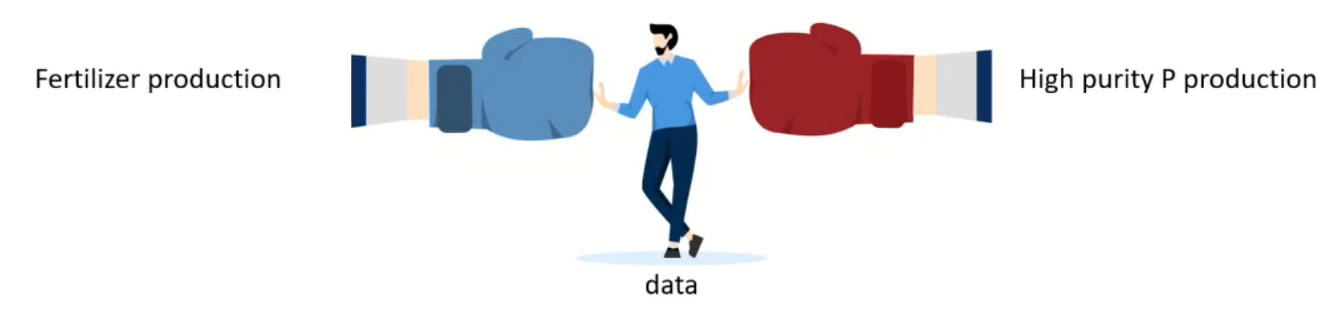
- Different quality requirements: Fertilizers use lower-purity phosphoric acid, while batteries require ultra-pure forms. Processing chains diverge after phosphate rock or recovered material.
- Scale differences: Agriculture still consumes 85–90% of mined phosphate, while energy and industrial uses represent a smaller but growing share.
- Shared vulnerability: Disruptions in phosphate rock supply affect both sectors, highlighting a common challenge rather than direct competition.
The key to resolving potential conflicts lies in circular phosphorus systems, sector coordination, and technological innovation.
Circularity as a Solution
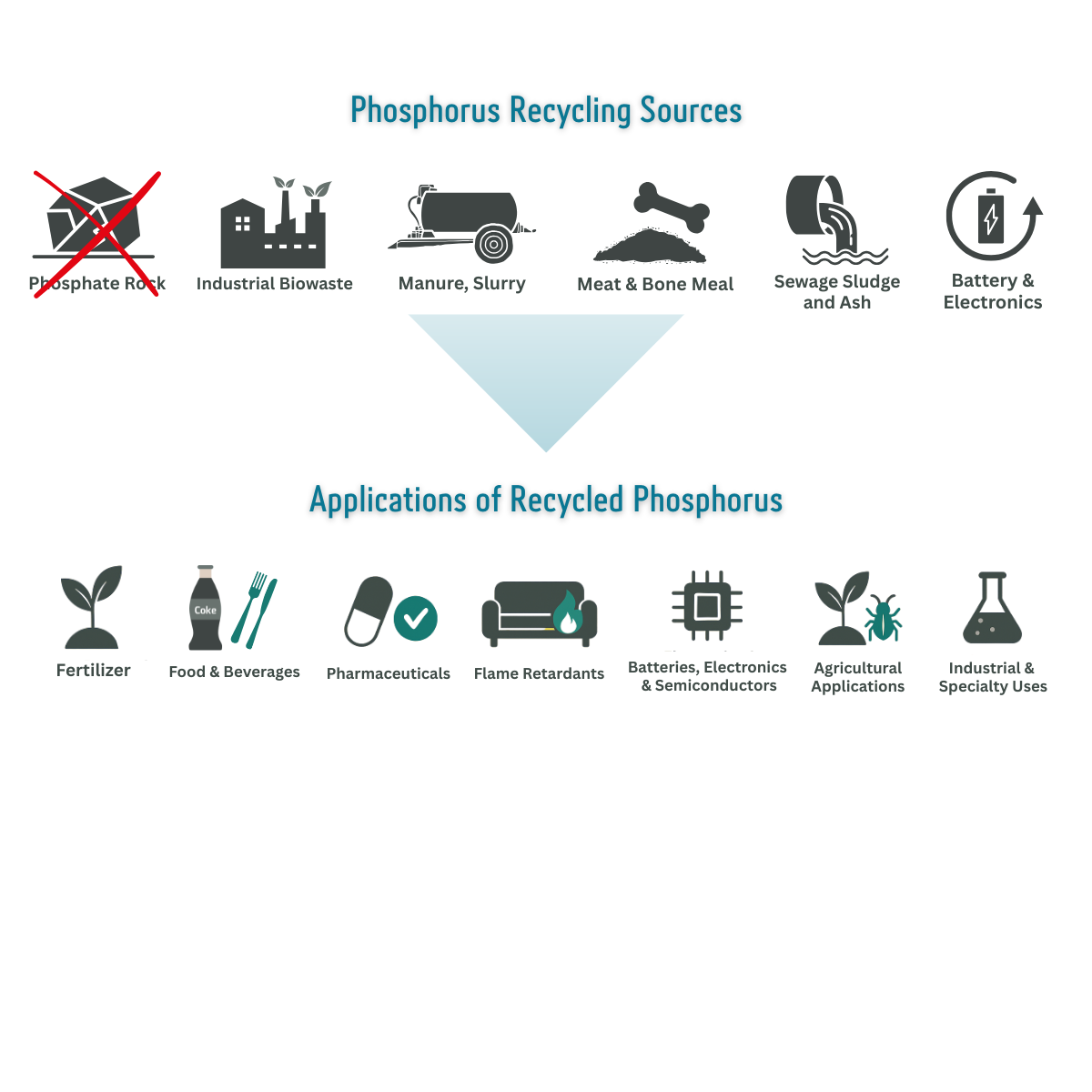
Workshop presentations highlighted multiple projects and approaches enabling a circular phosphorus economy in Europe:
FlashPhos
- Converts phosphorus-containing waste streams (mainly sewage sludge) into elemental phosphorus (P₄) and valuable by-products.
- Produces white phosphorus, a universal precursor for pharmaceuticals, batteries, flame retardants, and other industrial applications.
- The three-step process includes drying/grinding, flash reactor treatment (gasification and slag formation), and electrical refining to produce P₄.
- Generates by-products like iron alloys and high-temperature process heat, usable internally or in other industries.
- Could recover up to 300,000 tonnes of white phosphorus from waste streams, significantly reducing EU dependency on imports (currently 30–40,000 tonnes/year).
NenuPhar
- Focuses on nutrient recovery from animal manure, slurry, and wastewater, integrating technological, policy, and economic solutions.

- Demonstration sites across Spain, Latvia, Lithuania, Hungary, and Slovakia recover nitrogen and phosphorus using methods like ammonia stripping, composting, membrane-based technologies with pre-oxidation, and nature-based solutions including algae production.
- Addresses regulatory, social, and economic barriers, ensuring recovered nutrients can be reintegrated into agriculture or industry.
- Recommendations emphasize flexible, integrated regulations, financial support, training, and EU-wide coordination.
RENOVATE
- Recycles end-of-life LFP batteries and manufacturing scrap, recovering cathode materials, metals, plastics, graphite, and electrolytes.
- Focuses on direct recycling, preserving chemical structures, reducing energy use, and lowering emissions.
- Phosphorus in LFP batteries represents a small share of global demand but requires careful management to ensure sustainable supply and prevent waste.
- Ensures localized European supply chains, reducing dependency on imports from Asia and managing phosphorus content in batteries.
- Integrates digital tools, life-cycle assessment, and cost analysis to enable circularity in battery technologies.
Data-Driven Insights
- Secondary phosphorus sources like sewage sludge and meat & bone meal (MBM) can contribute to both fertilizer and industrial needs, but waste alone cannot fully meet demand.
- Phosphorus concentrations are low (~3% by mass) and geographically dispersed, requiring optimized recovery strategies.
- Data mapping allows targeted recovery, focusing energy-intensive thermal processes on high-density areas while directing lower-grade waste to fertilizer production.
- Effective consortia and networking across industry (technology providers), sludge and waste producers, and logistics are essential for stable, long-term operations.
Policy and Governance
The workshop emphasized that regulatory frameworks are crucial for scaling phosphorus recycling:
- Clear, binding rules provide investment security, market stability, and technological scaling potential.
- Current EU legislation (e.g., the Urban Wastewater Treatment Directive) encourages but does not mandate nutrient recovery.
- Quota or certificate systems, similar to CO₂ or plastics trading, could incentivize recycling and create a market for secondary phosphorus.
- Regulations must balance enforcement with market flexibility, enabling innovation while maintaining minimum recycling levels.
- Strategic support, including funding, pilot zones, and niche markets, is needed alongside regulation to de-risk investments and support technology adoption.
- Integration with agricultural policies and carbon credit mechanisms can strengthen incentives and policy coherence.
Workshop Audience Insights
The online audience provided further input, highlighting real-world challenges and requirements for EU self-sufficiency:
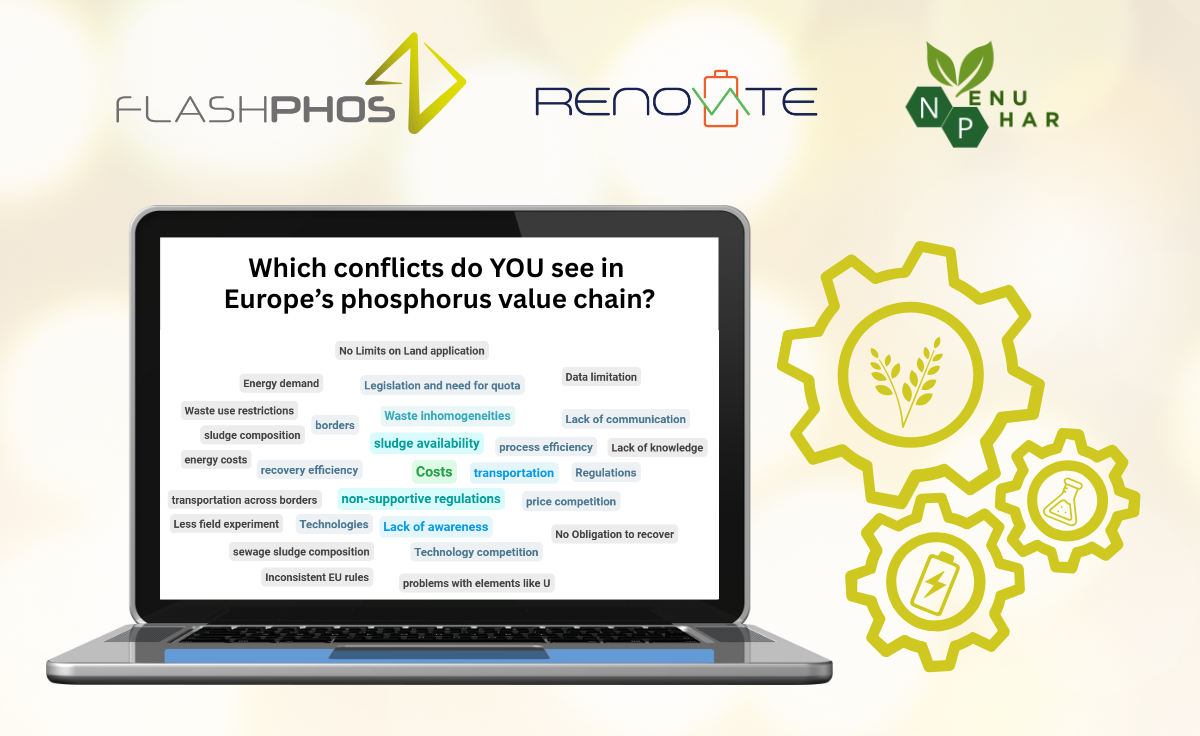
Perceived conflicts: Cost, sludge availability, transport, technology efficiency, price competition, regulatory gaps, lack of awareness, and inconsistent EU rules.

Audience Interaction 1 (69 Responses)
Key enablers for self-sufficiency:
- Clear and smart local and EU regulations.
- Consortia and coordinated industrial action.
- Market mechanisms for circular raw materials.
- Obligations to recover phosphorus and integrate agricultural sources into the circular cycle.
- Knowledge sharing, training, and stakeholder communication.
- Long-term stability and commitment in policy and business frameworks.

Audience Interaction 2 (23 Responses)
The Takeaway
Phosphorus is not a “food vs. energy” problem – it is a shared challenge requiring careful management. Circular phosphorus systems, supported by validated technologies (FlashPhos, NenuPhar, RENOVATE), strategic policy, and industrial collaboration, can ensure sustainable supply for both agriculture and industry.
Key priorities include:
- Technology validation to prove feasibility and reliability.
- Investor engagement to scale industrial operations.
- Strategic political support to provide clarity and long-term market certainty.
- Circularity and coordination to maximize efficiency and reduce waste.
By integrating these elements, Europe can transform phosphorus from a potential bottleneck into a circular, resilient resource, supporting both global food security and the transition to sustainable energy systems.