
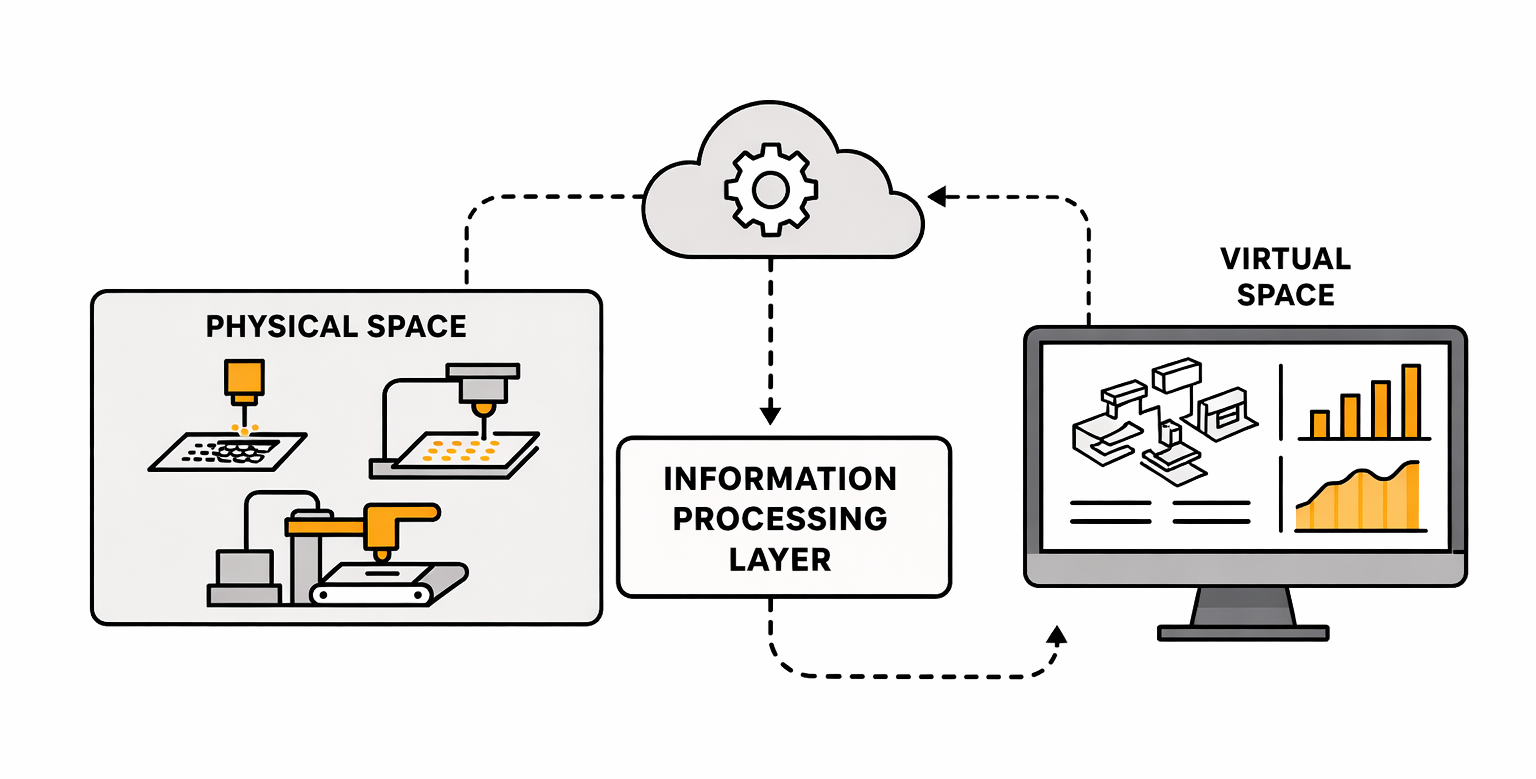
Three European research initiatives – FlashPhos, BioFibreLoop, and Dust2Value – recently joined forces to host a joint webinar exploring how Digital Twins are transforming industrial research and innovation. The online event brought together researchers and industry partners from across Europe to discuss how advanced digital modelling tools are helping accelerate the development of sustainable industrial processes.
Although the three projects address different sectors – ranging from phosphorus recovery and circular textiles to resource recovery in the steel industry – they share a common technological approach: the use of Digital Twins to support process design, optimisation and scale-up.
Digital Twins are virtual representations of physical processes that combine modelling, simulation and operational data. In industrial research, they allow scientists and engineers to simulate complex processes, test different scenarios and optimise operational parameters before implementing changes in real-world systems. This significantly reduces development risks, time and resource consumption.
During the webinar, speakers from the three projects demonstrated how Digital Twins are already supporting innovation in practice. In the FlashPhos project, coordinated by the University of Stuttgart, a Digital Twin is used to model a novel process that recovers valuable phosphorus from sewage sludge and converts it into industrial raw materials such as white phosphorus, cement substitutes and iron alloys. The digital model enables researchers to analyse the complex high-temperature process, evaluate operating conditions and scale results from pilot plant experiments to potential industrial deployment.
“As we are developing a completely new industrial process, the Digital Twin plays a crucial role,” explained Christian Schmidberger, coordinator of the FlashPhos project. “It allows us to upscale from pilot plant calculations to industrial scenarios and evaluate the feasibility of the technology before a full-scale plant is built.”
Digital Twins also serve as a collaborative platform for large research consortia. Within the BioFibreLoop project, which focuses on circular bio-based textiles, the Digital Twin helps partners analyse production processes and explore optimisation strategies for sustainable materials and coatings. By integrating experimental results, process data and modelling tools, the digital environment enables researchers from different disciplines to work together on the same process model.
“The digital twin is not a static entity – it evolves as we learn more about the process,” said Els Nagels, CEO of Inspyro, who presented the modelling work during the webinar. “It is a tool that continuously integrates new knowledge from experiments and simulations, helping partners make better decisions throughout the project.”
Another key benefit highlighted during the webinar is the ability of Digital Twins to support strategic industrial decision-making. In the FlashPhos project, the Digital Twin was used together with geographic and material flow data to analyse potential locations for future industrial plants across Europe. In other cases, the models are used to explore how new processes could be integrated into existing industrial infrastructures, creating synergies between sectors.
The joint webinar highlighted how Digital Twins are becoming an increasingly important tool for accelerating industrial innovation, reducing development risks and supporting the transition towards a circular economy. By enabling virtual experimentation and providing insights into complex process interactions, Digital Twins allow researchers and industry partners to evaluate new technologies long before they are implemented at full scale.
The collaboration between the three projects demonstrates the growing importance of digital modelling approaches across different industrial sectors. By sharing experiences and lessons learned, the projects aim to strengthen knowledge exchange and support the broader adoption of Digital Twin technologies in European industry.
As industries face growing pressure to improve resource efficiency and reduce environmental impact, Digital Twins are expected to play a key role in developing the next generation of sustainable industrial processes.