
A Socio-Economic Impact Assessment (SEIA) is a methodological framework used to analyse and evaluate the potential social and economic impacts generated by a technology, project or policy. It helps identify both beneficial and adverse effects on stakeholders, communities, industries and value chains, supporting informed decision-making for innovation deployment and industrial scale-up.
Within the FlashPhos project, the SEIA aims to assess the socio-economic implications of implementing the FlashPhos process for phosphorus recovery from waste streams. In the following interview-style article, the approach and methods used to conduct the FlashPhos SEIA are explained, highlighting system boundaries, stakeholder engagement and the analytical methodology adopted.
With respect to the European industrial strategy and considering its expected socio-economic impact, how can the FlashPhos process be allocated?
The FlashPhos process SEIA builds on the study and the analysis of implications deriving from the adoption of human-centric approaches to technologies and organisational models in industry. In fact, human-centric technology development and deployment are still emerging in the EU and require further Environmental, Social, Governance and policy attention, particularly in a context of intense global competition, geopolitical crises, unbalanced availability of Critical Raw Materials, and ongoing green and digital transition strategies.
The adoption of such a model implies continuous attention to the 3P goals of human-centric industrial development: Planet, People and Purpose. The expected 3P goals resulting from the adoption of the FlashPhos process are represented in the following graph (fig.1), where the goals and the linked measurable KPIs are shown together.
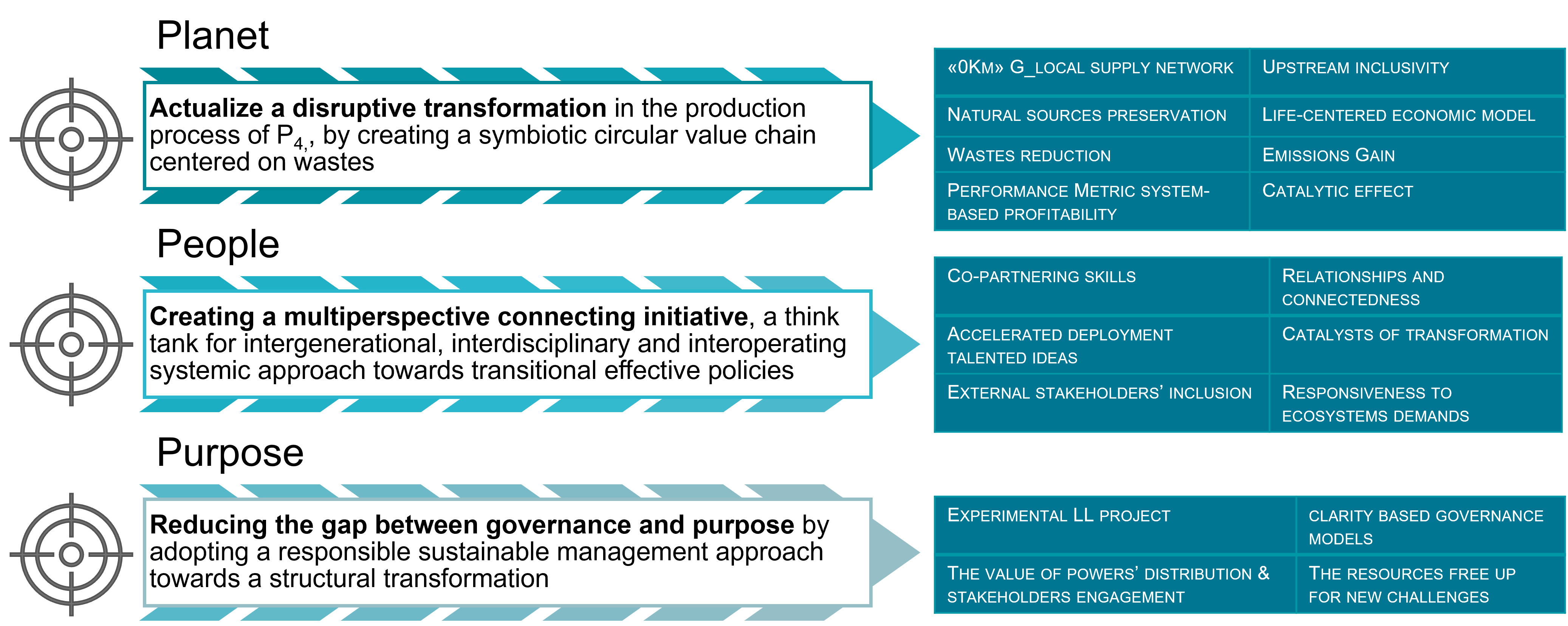
Figure 1. The 3P goals of FlashPhos process
Useful phosphate can be recovered from waste streams in many ways to be recycled and used as a resource for new products. What is FlashPhos’ distinctive feature in this context?
FlashPhos aims to be the first industrial process capable of recovering elemental phosphorus in a circular systemic way, where the resulting by-products can also be upcycled and reused across different value chains.
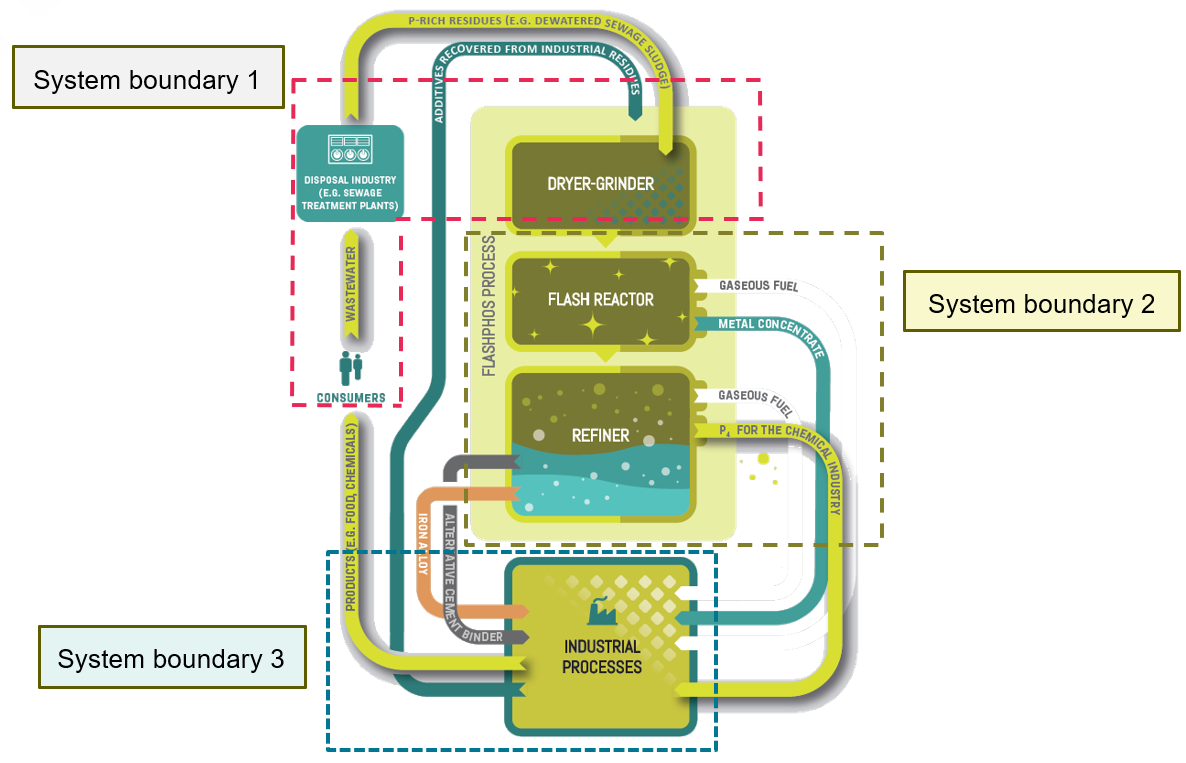
Figure 2. The FlashPhos thermochemical process and its SEIA system boundaries
The FlashPhos SEIA develops through a detailed analysis of different specific “boundaries”. How are the boundaries defined, how have they been determined and what do they represent?
The system boundaries refer to the onshore unit processes that have been included in the SEIA evaluation. Represented in fig.2, they also include additional hybrid offshore system boundaries that comprise both the commissioned location and the input source location.
In the FlashPhos SEIA, the following stages have been considered:
-
Drying/Grinding of dewatered SSL functional unit:
This phase includes the design and set-up of the plant enabling the process from waste raw materials to the form of dewatered SSL and the mechanically pre-treated secondary adapted phosphorus source. A dedicated production line has been established to transform the dewatered SSL into the appropriate precursors required to produce elemental phosphorus. -
Thermochemical process functional unit to produce elemental phosphorus, including:
a. RedOx reaction within the so-called Flash Reactor to produce flash melt containing Ca, Si, Fe, P and Al in different forms.
b. Refining phase: reduction to elemental phosphorus, formation of iron alloys, condensation to liquid phosphorus and granulation of cement-additive by-products.
The boundary system also includes the installation and commissioning of plant components, as well as onshore assembly for testing. Typical activities include upstream and downstream logistics services, installation of the FlashPhos system and its operation. Once the installation becomes operational, various ongoing activities are required to support its functioning, including monitoring.
-
Technology adoption: systemic onshore and offshore industrial exploitation, including the installation and/or exploitation of the process functional unit, as well as adaptation and maintenance activities.
The SEIA is expected to highlight the most relevant impacts from a social and economic perspective. How are these impacts selected and evaluated?
For each of the onshore boundaries, including their offshore systemic extensions, the most relevant beneficial and adverse impacts on the involved stakeholders have been analysed and quantified in support of industrial scale-up and final market adoption.
The selected social and economic topics are the result of a comprehensive materiality assessment, developed through dedicated surveys addressed to various stakeholders throughout the project. SEIA can identify and distinguish numerous measurable impacts of a proposed development; however, not every impact may be significant. The people who are directly or indirectly affected therefore play a role in determining whether impacts on valued socio-economic components are significant.
Three specific surveys were conducted:
-
Survey I: Scoping and profiling the baseline conditions
-
Survey II: Predicting environmental impacts and identifying mitigation measures
-
Survey III: Evaluating the significance of adverse and beneficial impacts
These surveys also contributed to the definition of stakeholders (fig.3), including:
-
Policy-making and regulatory officers
-
Solution developers – research and innovation actors and technologists
-
Solution adopters – business and innovation actors and technologists
-
Phosphorus cycle supply chain workers: manufacturers, installation and adaptation specialists
-
Citizens – end users
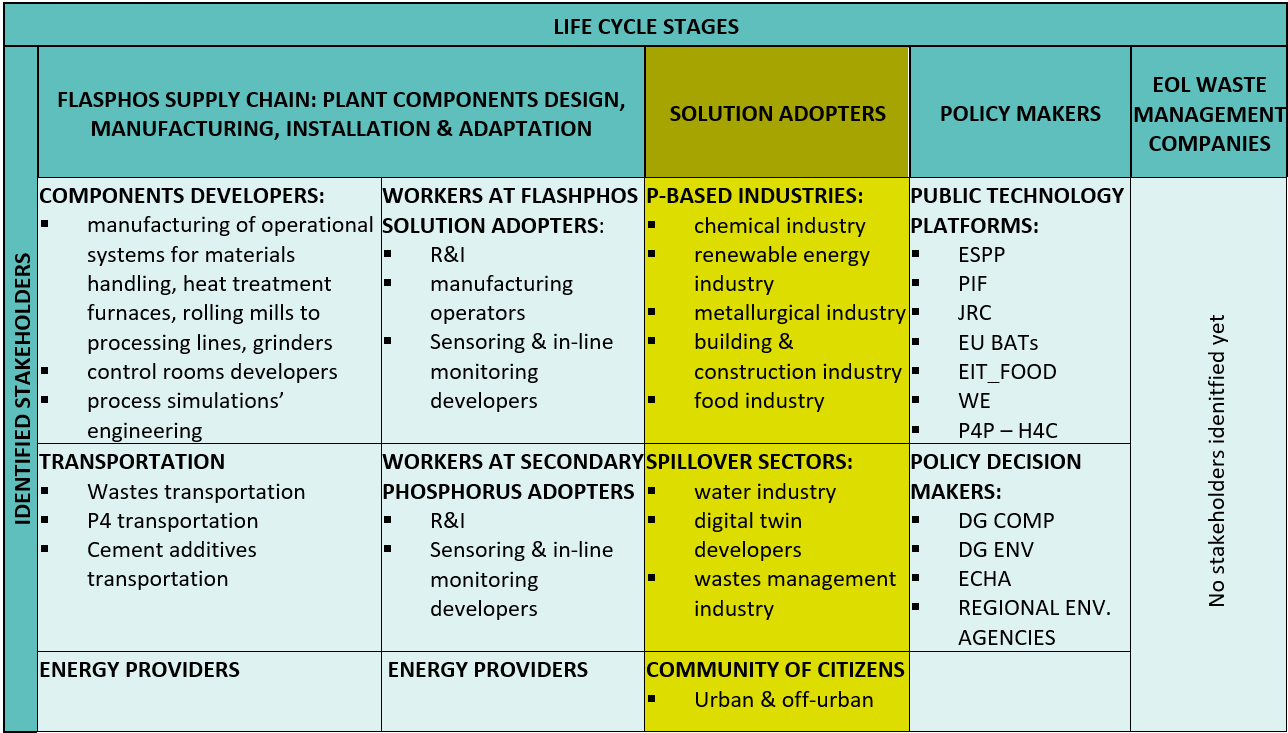
Figure 3. Relevant stakeholders for FlashPhos project
Additionally, to identify the social topics relevant for communities (fig.4), the project partners themselves as well as individuals from the academic and civil society spheres, including students, were involved in the assessment. The survey was also conducted during the final stage of the project to capture potential changes in perceptions resulting from the outcomes of the innovation project.
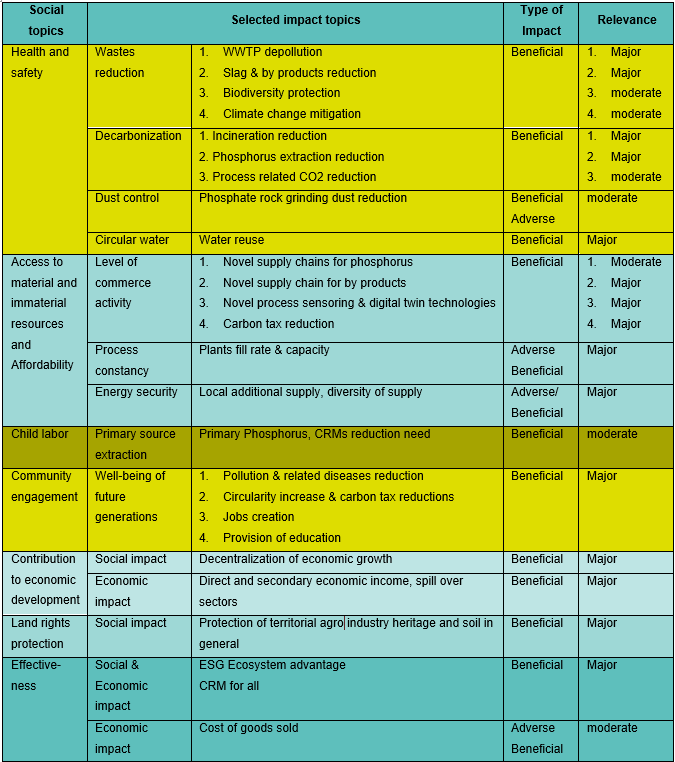
Figure 4. The relevant FlashPhos social topics for the 3P community
Which methodology has been adopted to assess the FlashPhos socio-economic impacts?
The adopted methodology is based on the UNEP/SETAC guidelines for Social Life Cycle Assessment (LCA) and on the Product Social Impact Assessment Framework presented in the Handbook for Product Social Impact Assessment (PSIA-2020).
Moreover, according to these well-established methodologies, the standards UNI EN ISO 14040:2006 and UNI EN ISO 14044:2006 have been followed in performing the LCA analysis. This analysis represents a central pillar of the socio-economic impact prediction of the FlashPhos solutions, particularly in terms of health and safety and environmental aspects, including both beneficial and adverse effects.
After identifying the so-called hotspots (most relevant factors), an impact assessment phase was conducted using the PSIA 5-point reference scale. The assessment process was complemented by an economic evaluation of several indicators in order to further analyse the economic implications of the FlashPhos project.
In this phase, the main outputs were analysed to better understand the resulting socio-economic impacts associated with the industrial implementation of the FlashPhos pilot system. Short-, medium- and long-term scenarios have been identified and will support stakeholder engagement in the next phase of the project, which focuses on industrial scale-up and exploitation.
The described methodology enables the development of a comprehensive SEIA that recognises the importance of the active relationships between people, culture, economic activities and the biophysical environment, as illustrated in figure 5.
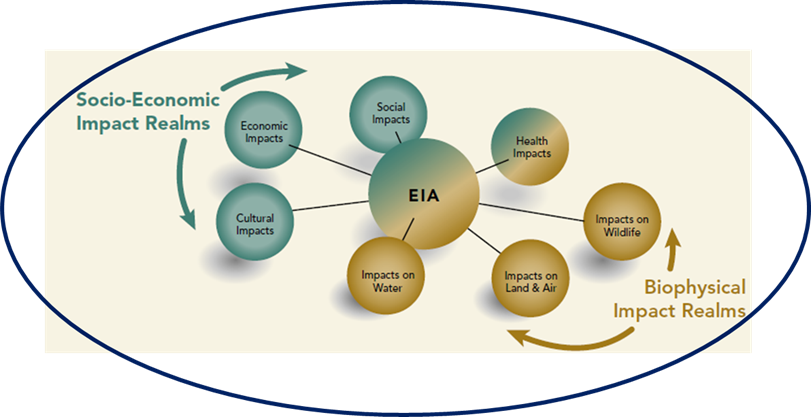
Figure 5. The SEIA model for FlashPhos
How will the results of this assessment be interpreted?
The objective is to generate a set of conclusions, study limitations and recommendations for decision-makers, supporting the identification of both beneficial and adverse impacts of the FlashPhos solution in the social and economic spheres. In this context, the social sphere also includes environmental and health and safety aspects.
The assessment will evaluate:
-
The driving economic activities associated with FlashPhos and the supply chain capacity
-
The economic impact of the recycling thermochemical plant on the hosting industries
-
The economic impact on the actors exploiting secondary phosphorus materials
These results will be analysed in comparison with the state of the art.
The complete interpretation of the results will be described in the final SEIA report, which will be publicly presented during the FlashPhos Final Conference, taking place on 21 April in Leoben, Austria. More information and registration here.